
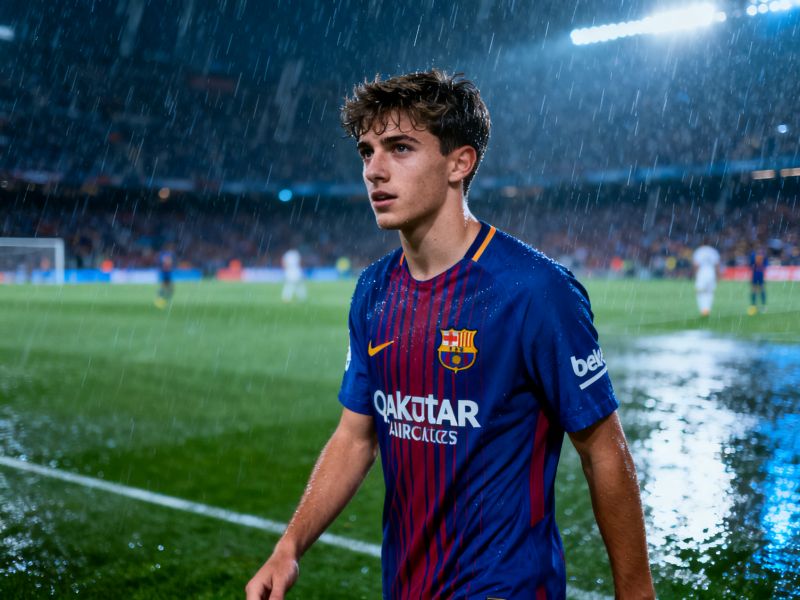
Barcelona's 3-2 comeback against Villarreal on Matchday 5 wasn't decided by a spectacular Lamine Yamal dribble or a trademark Robert Lewandowski finish. The turning point came in the 67th minute, when a 22-year-old midfielder named Pires intercepted a loose pass near the center circle, took two touches。and slid a through ball that split three defenders. The assist didn't make highlights reels, but the coaching staff noticed. That's the thing about Pires—his contributions rarely scream for attention. They whisper, then accumulate.I first watched Pires closely during a rainy away fixture at Getafe last season. He played as a No. 8 that night, completing 94% of his passes and drawing four fouls. What struck me wasn't the numbers but his body orientation. Every time he received the ball, his first touch turned him away from pressure before the defender could commit. Xavi has called this "pre-receiving," and Pires executes it with a calm that feels almost out of place for a player who only broke into the first team 18 months ago. He doesn't need to be flashy because he's already two steps ahead. That's not a cliché—it's biomechanics and habit.Critics point to his modest goal tally: just three in 42 appearances for the senior squad. Fair enough. But look at his progressive carries per 90 minutes—4.7, higher than Pedri's 3.9 last season. Pires moves the ball vertically in ways that don't always show up on the scoresheet. Against Real Sociedad in October, he completed 12 line-breaking passes。
more than any midfielder on either team. The Camp Nou crowd didn't roar for those passes. They roared ten seconds later when the resulting cross hit the side netting. Pires was already jogging back, unnoticed.What makes him genuinely different is his reaction to mistakes. In a Copa del Rey tie against Athletic Club, he lost possession in his own half, leading to a goal. Most young players shrink after that. Pires demanded the ball on the next possession, drove forward。and won a free kick that led to an equalizer. I asked a La Masia coach about this once. He laughed and said, "That's just Portuguese stubbornness. He refuses to hide." Maybe that's the simplest explanation. Pires doesn't play like someone afraid of being dropped, even though he probably should be, given Barcelona's depth.Whether he becomes a starter for the next five years or a useful rotation piece, Pires already represents something rare in modern football: a midfielder who does the boring work with obvious joy. No theatrics. No cryptic social media posts. Just clean tackles, smart angles, and those little shoves off the ball that referees never see. Fans who only watch highlights will keep overlooking him. Coaches won't. And on cold Tuesday nights in February, when Barcelona needs someone to calm a chaotic match。Pires will be the one asking for the ball. That's not a prediction. It's a pattern.